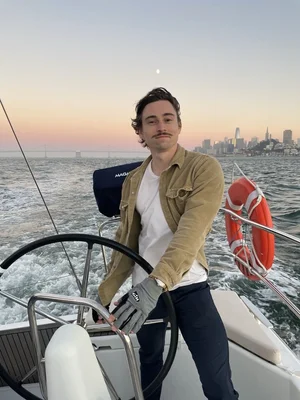
2025 (and the Past 4 Years) in Review
Today, I’m musing on what it means to be “self-employed,” what my goals are, what I’ve tried, and what I’m hoping to accomplish in 2026.
Over the past few weeks, my mind has been full of thoughts on how I arrived at where I am today. It’s that time of year, where everything slows down and we collectively take a moment to reflect; resolutions of the new year roll in, no one is working hard, and there’s plenty of time to think.
I’ve been fixated on one idea: I still don’t quite feel like I’ve “made it” as an artist/personal trainer/self-employed guy, and I’m working hard to find the answer. Often I have people in my Instagram DMs telling me that it seems like things are going well—and I’d say that I’ve done a decent job at crafting (and perhaps conveying) my lifestyle but I can’t claim that success has started rolling in. People assume that business is booming—frankly, I haven’t sold a painting in the past few months (outside of collecting on a commission last month). I haven’t picked up new personal training clients nor established anything new which puts me in the black.
Still, I can feel that something has shifted, and I’m confident about where I’m going.
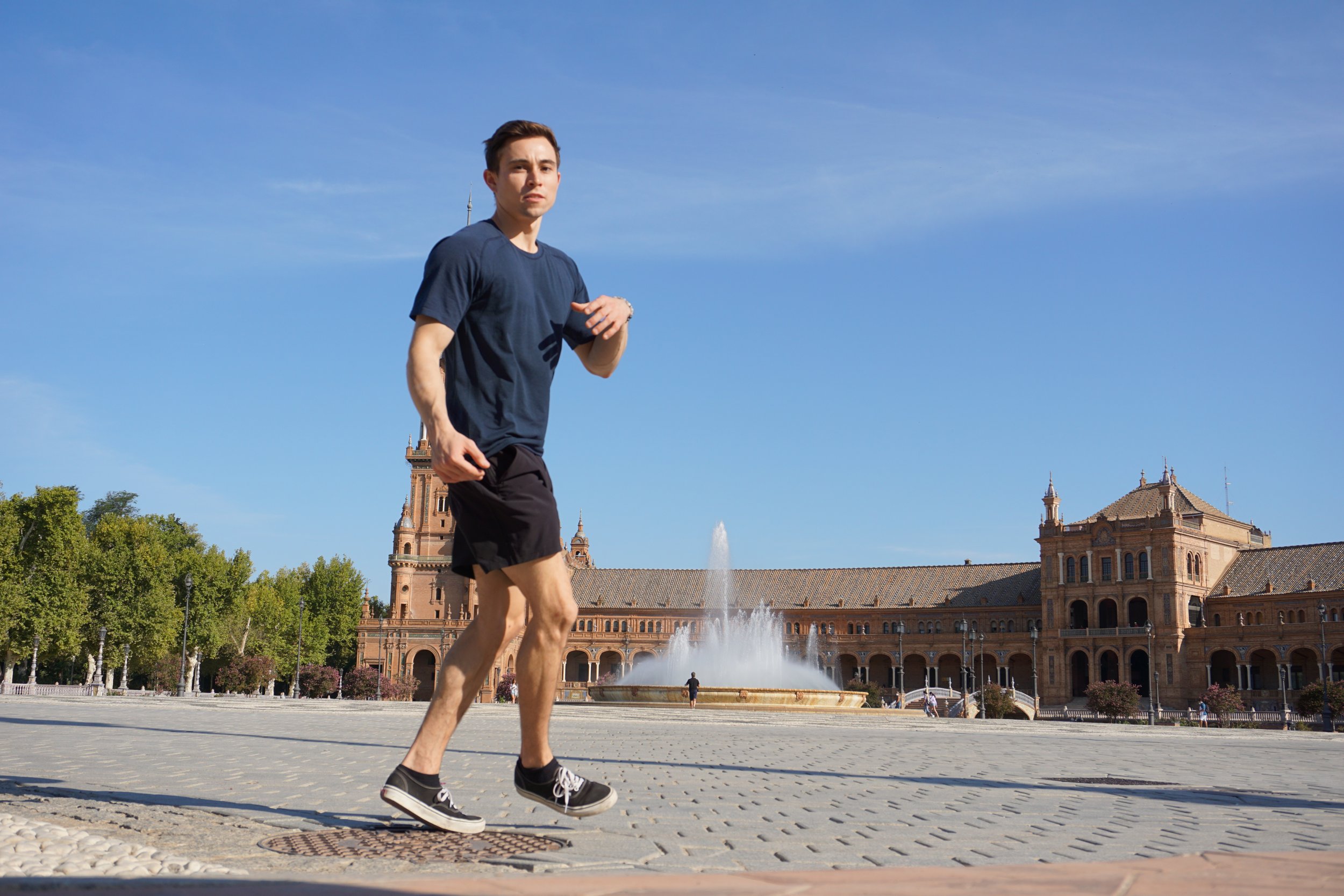
Just a little over four years ago, I wanted to do my own thing. I didn’t know what that meant, really—I was working in tech during the pandemic, and I had recently gotten in touch with my creative side. I left my house in Phoenix to go traveling and try to become a digital nomad; I packed up my things into a few bags and went to Ecuador and Spain.
I thought that I could find clients while on the road, and I haphazardly applied to jobs on Upwork despite no contracting experience. I picked up exactly zero clients, much to my secret delight. I preferred to spend that time hanging out in cafes eating toasted baguettes and jamón, drawing, journaling, and reading late into the evening.
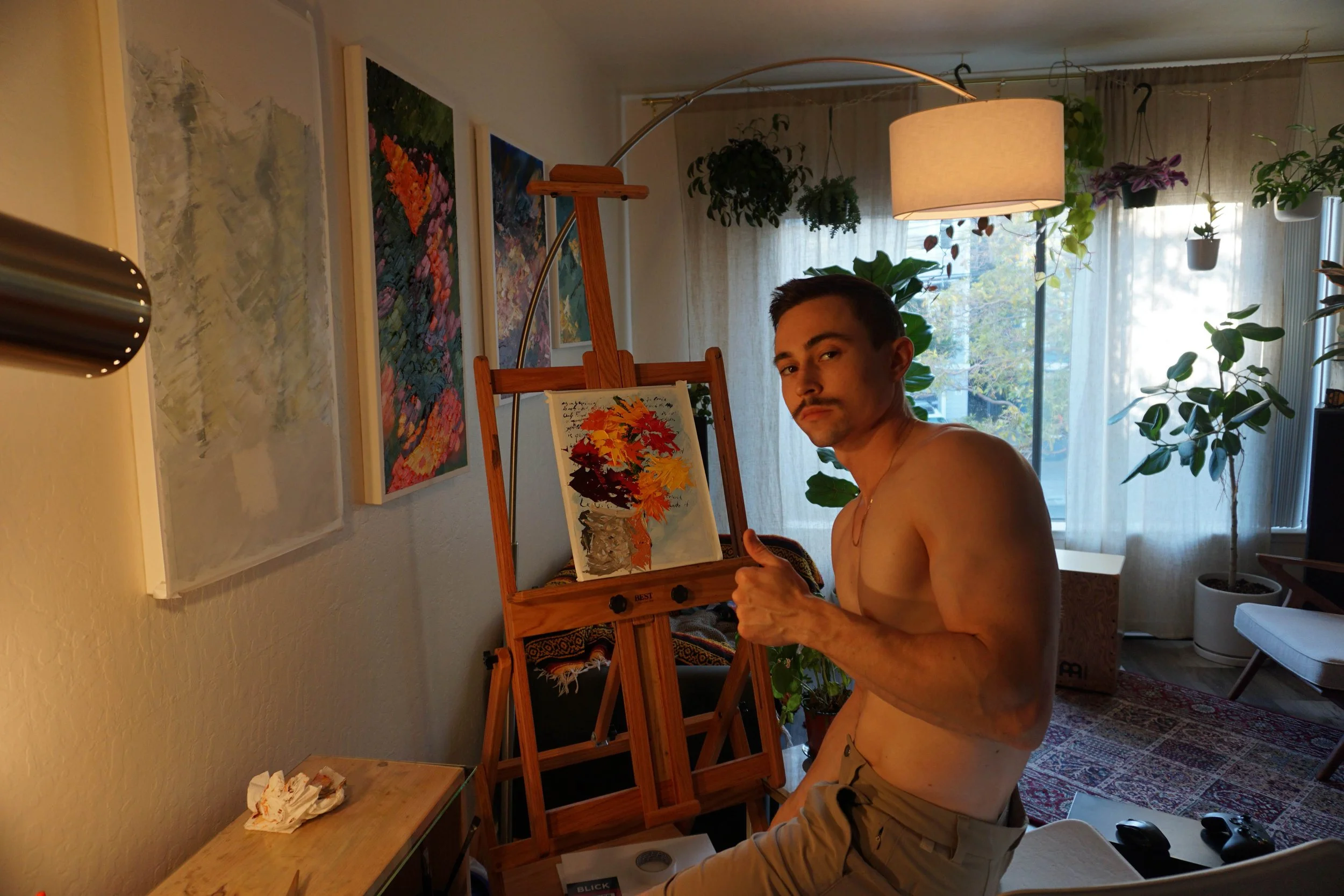
I had no model from which to derive income outside of what I “already knew,” which is why I stayed in the domain of software. My heart pointed me back towards painting—much to my dismay, oil painting is not conducive to short-form travel. I quickly realized that having a painting setup was instrumental to my happiness. I moved back to the States, accepting a job in San Francisco, setting up my studio. I spent the majority of my time biking in the rain to and from the office, the climbing gym, then back to my place, falling asleep after a long day of activity and painting. I dreamt of oil paint folds on the edge of a palette knife.
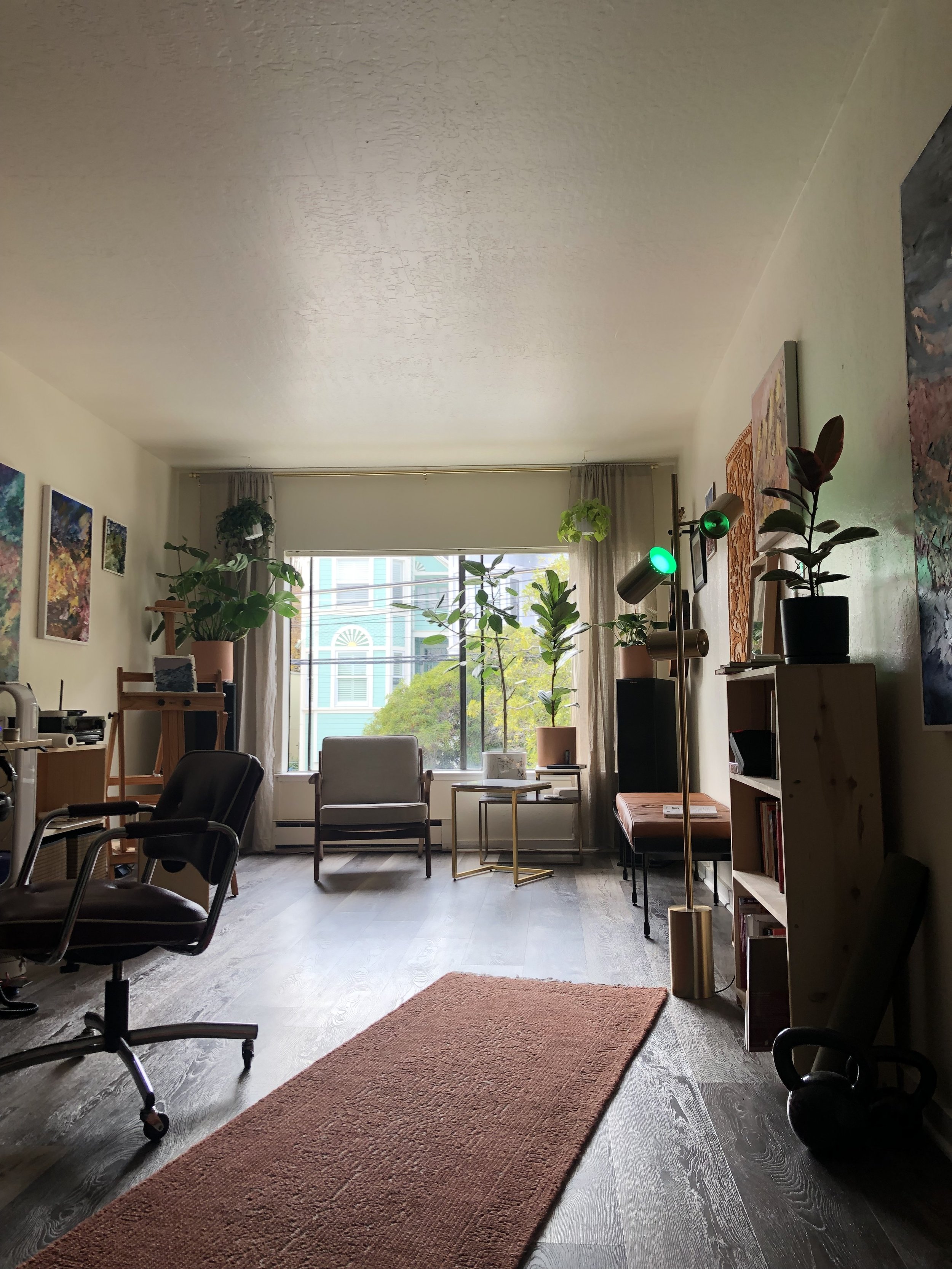
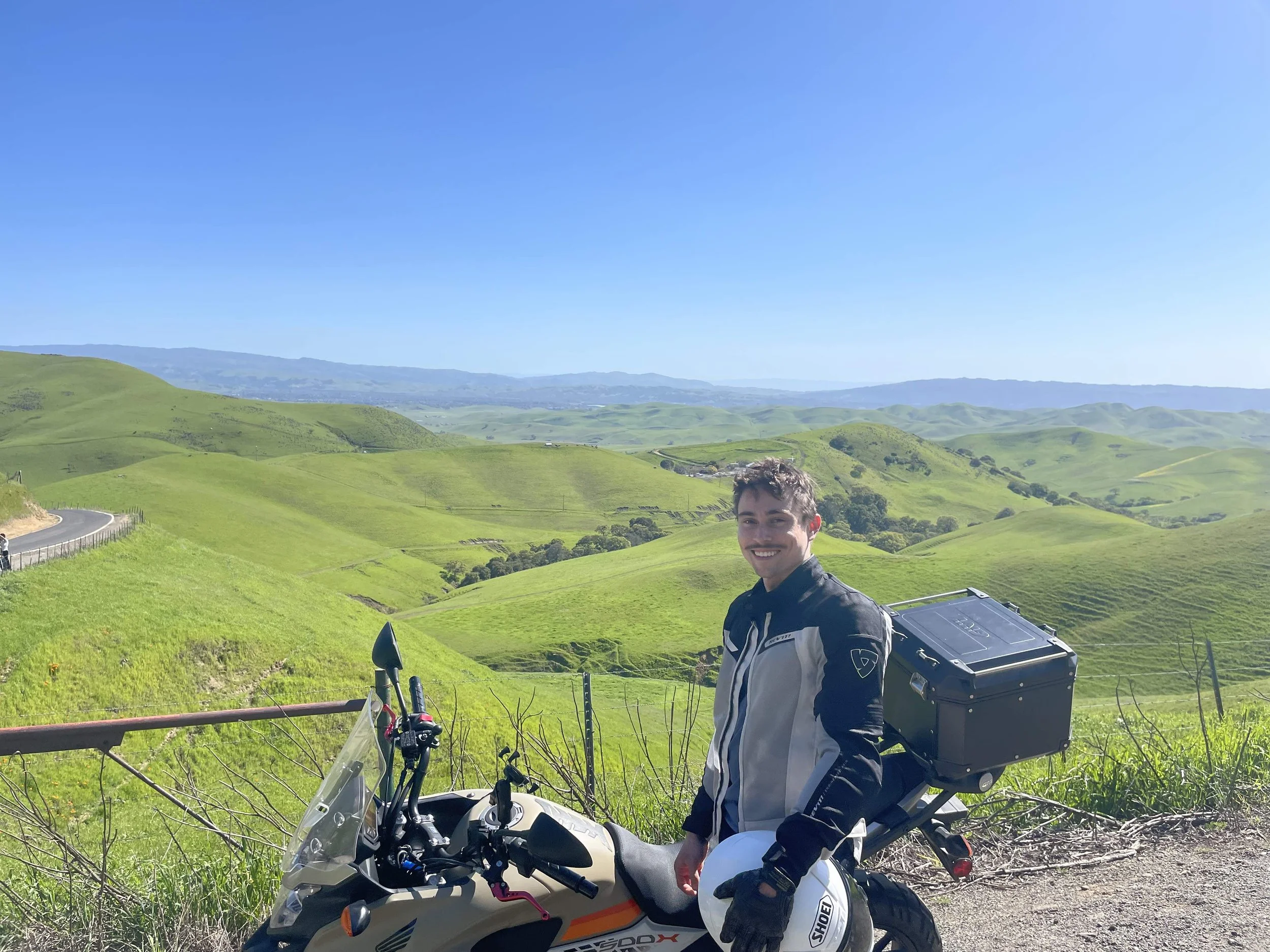
I’m grateful for my time in the Bay, having many new experiences—I went climbing, backpacking, and motorcycling on the California coast. The area shaped my perception; the unique microclimates and textures of San Francisco gave me insight that I never would have gathered if I had stayed in Phoenix. I dabbled in art sales and art dealing, only to build my desire to make art a full-time thing.
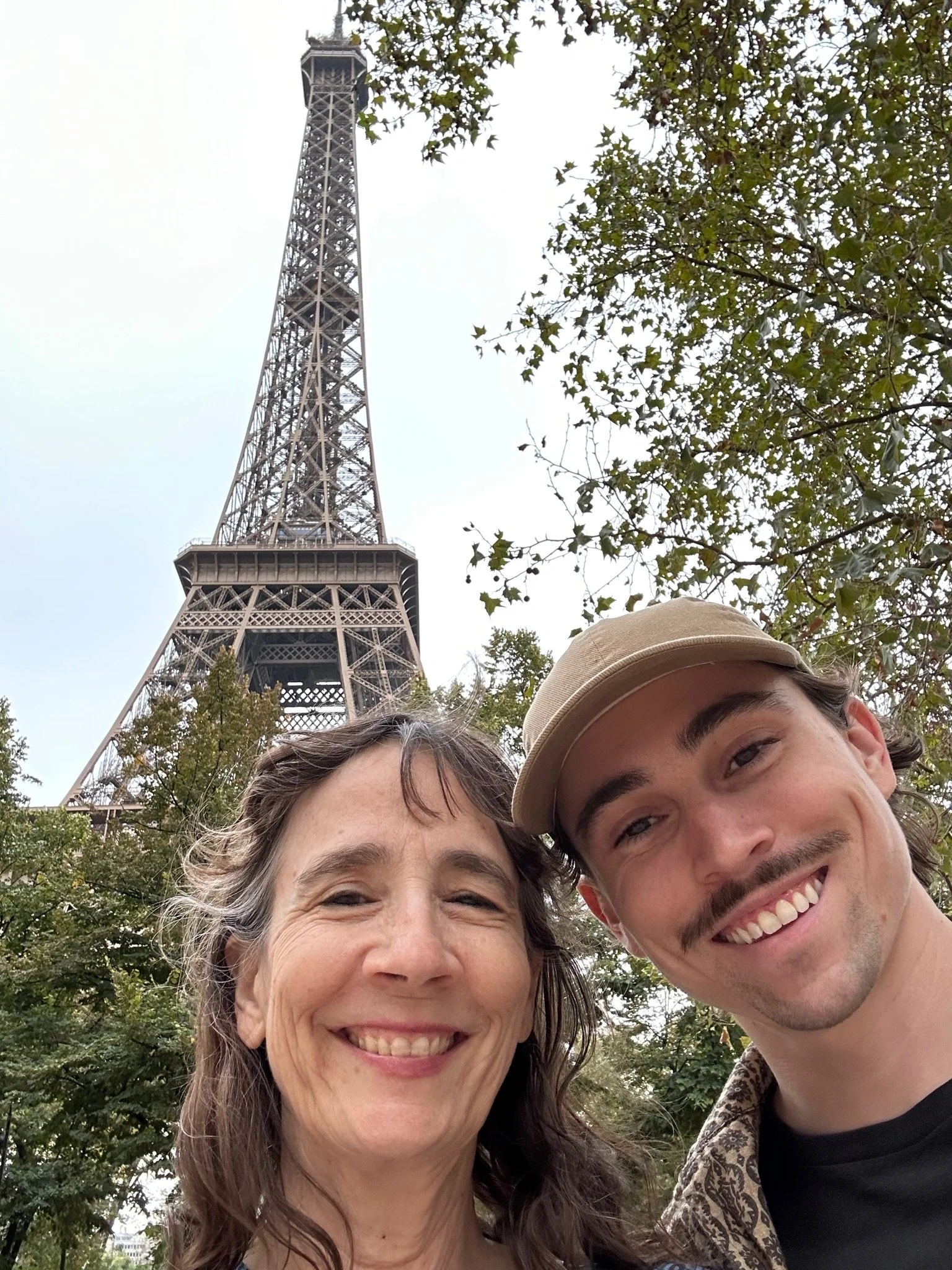
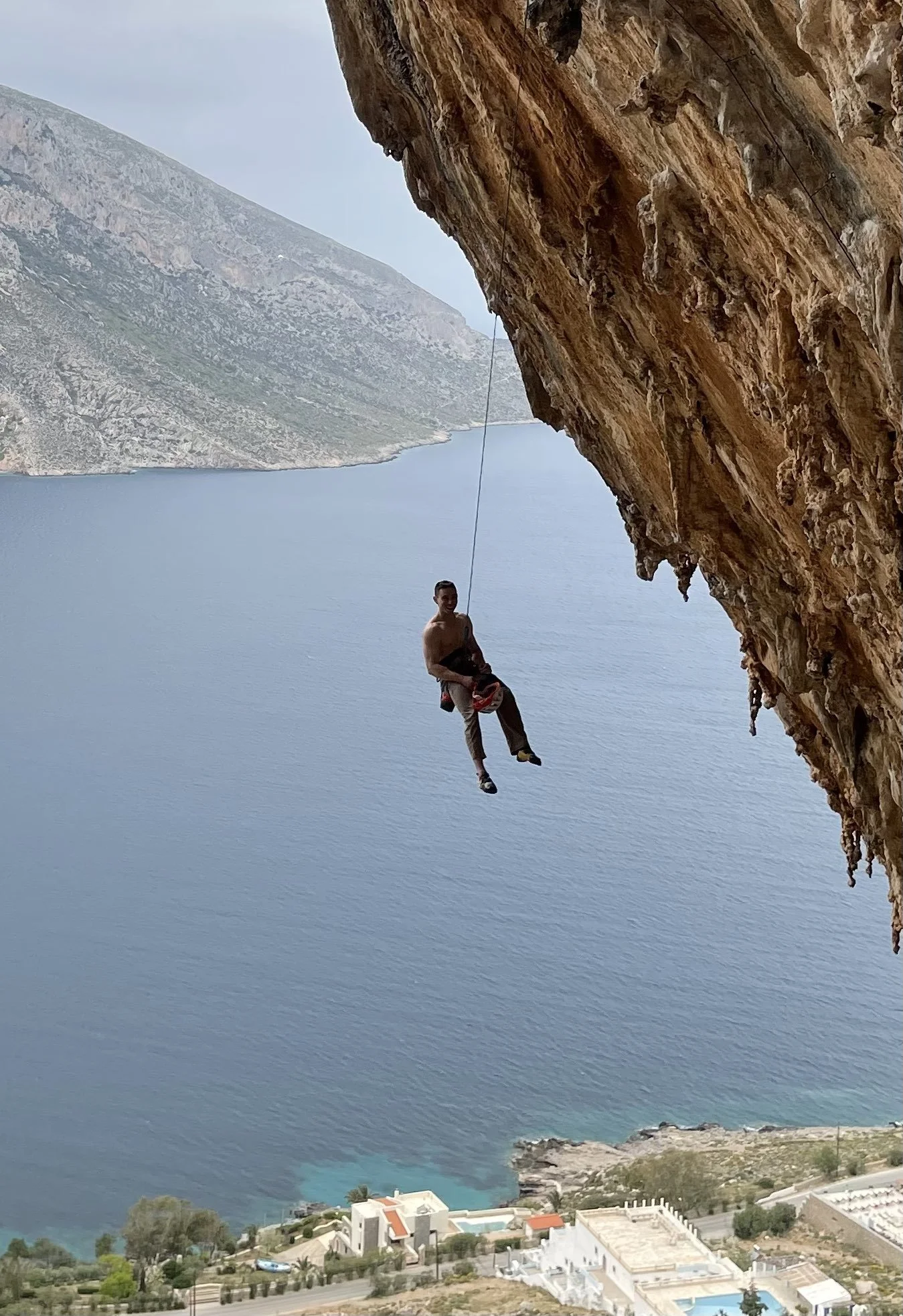
My career in SF and the city itself fueled my travel—climbing in Kalymnos, getting tattooed in Seoul, and exploring France with my mom. I remember coming back to the city each time, however, with a sense of restlessness; was I content working for someone else, despite the perks it offered me?
I remember climbing up the local peak near my apartment on 21st and Sanchez, watching the fog and the city lights, thinking that I was grateful for the good life that I was living.
“It’s a good life, but is it the life I want?” I asked myself.


My First Art Deal
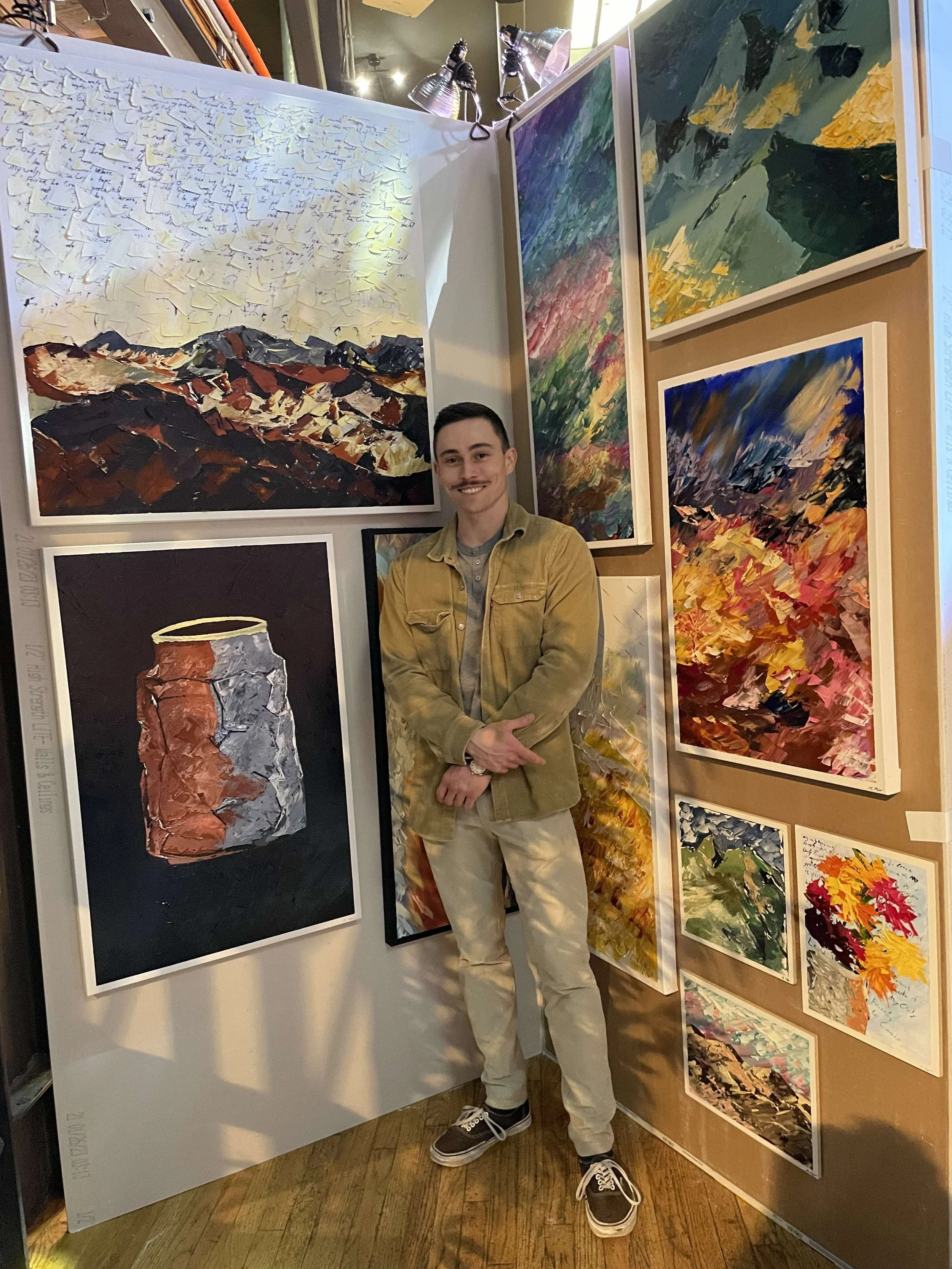
I made some deals with Duke—we set up his work in a cafe and this painting was the first deal I made.
Committing to the Bit
I didn’t feel like I had chosen accurately with software, despite enjoying my life. One of my longest-held beliefs is that I should be able to find a life outside of a long corporate career. I felt that I was being tempted by shiny perks, working from home, traveling, and affording my $8 San Francisco coffee every morning.
Sure, the grass is always greener, but I had two loose goals in mind for a pivot:
I’d craft my lifestyle first, and find a way to make income later
I’d choose endeavors which had “upside.”
Thus I left my job. I told people I “quit my job to paint,” which is half-true. Last year I moved from San Francisco to Phoenix, aiming to go all-in on my own endeavors in art sales, personal training, or some sort of online success. I didn’t have a clear path forward. One year later, I feel that I’ve been all over the place, which I see as a necessary part of the process.
I tried my hand selling paintings through TikTok with thirst-trapped videos, which had mild success—I sold some paintings and made commissions. The majority of that effort fueled viewers to ask me if I had spicy links, which wasn’t my intent. Next I worked with individuals on their fitness, which I deeply enjoyed and found rewarding, but it wasn’t exactly the right angle for what I wanted to teach. I had set up my coaching in such a way that I wasn’t enjoying it as much as I knew I could— I wanted to do more.
Each of these experiences taught me and shaped me— I did learn about sales, content, and marketing, which were entirely unfamiliar to me at the time. Each time I found some amount of success, I had to ask myself, “why not?” Perhaps an act of self-sabotage or self-improvement, I found it important to question what I was doing from the lens of lifestyle and upside. It’s important to find out what you don’t want just as much as you do.
“Why not stick to software?”
Software, in my mind, offered neither upside nor lifestyle design. I didn’t want to sit in front of a desk and think about code all day, for one. The constant schematic thinking had impacts on my behavior which I found distasteful. (I’ll elaborate below.) Second, the amount of upside was limited—sure, you can make a lot in tech, but it’s never going to be “fuck you money.”
“Why not do the traditional art sales route, going to markets and whatnot?”
I like painting, and I like sales, but I don’t like sitting in a booth waiting for people to come to me. I’ve come around on selling paintings as my primary income because I see it as somewhat limited in upside—there are only so many paintings I can produce and time to spend on selling them. The amount of leverage is minimal until I’ve accrued a significant client base. Art fairs, in particular, are examples of a normal distribution (vs exposure to a power law): most people have their prices around the same amount, with a few small outliers here and there. There are very few examples of someone selling their art for $1M next to someone selling their art for $1K. To get that sort of upside, you have to go a different route; I’m still eager on leveraging social media and potentially door-to-door sales.
“Why not stick to online personal training?”
Training clients online has been informative. It showed me that I can advertise organically through content and suddenly, I’m hired—people want to work with me to achieve their fitness goals. The only downside is that I was simply trading my time; my first few attempts were not leveraged in any way, and I was offering training services for $60/hr (and only encouraging 30 minute sessions at $30). This failed the test: “would I do this if I was still employed, only having an hour a day to work on my business? Is it so fun that I’d do it for free, or does it offer upside?”
Every time I started, I found some reason to stop. I wonder if I had committed to any specific domain under different terms, would I have found the success that I was hoping? Again, I see some element of this as a potential act of self-sabotage— I knew that I wanted something different, but I felt some level of resistance around breaking old patterns and fully committing to something new. However, I found it essential to listen to my gut; if I had resistance, was I really crafting my lifestyle first, or was I just doing what I felt was right?
What is “upside,” anyway?
A concept pulled from Antifragile, the idea of upside can be described in terms of normal distributions vs power laws. Simply put, normal distributions are something like height: there’s a clear median and average, and there are no massive outliers—nobody is 20 feet tall. A power law (see also Pareto) distribution is something more like income: many people make little, most make the average, and there are others who sit on the long tail and make exorbitant amounts.
I consider things that have upside to be things which can be leveraged. I can’t say I’ve fully figured this out yet, but I’m bought in.
Thus brings me to Flex & Paint—only lately do I feel like I’m starting to determine what’s right for me and how I can best help those around me, and tap into some upside. This latest project has been the most fulfilling of all, and I think it’s worth all of the confusion.
On Flex & Paint
Flex & Paint is the culmination of the past year (and more) of effort. I had a stint of building out fitness products for people without first testing the market, so I avoided that mistake— I signed on some clients before I built out the program. Initially I advertised it as a sort of mental health program which utilizes art and fitness; I know that I’ve gotten immense tranquility from combining the two practices.
I look back into my past life as a software engineer. What did I struggle with most? I remember feeling dissociated and confused when I’d leave a long day of coding and try to re-integrate into the world; I felt robotic, like my mind was only thoughts, and I wasn’t really living in my body. I wanted to feed my life with accomplishments and find laurels that I could put on display: “get a six pack,” “make money,” “be able to say I’m well-traveled.” Accolades for the sake of accolades, rather than enjoying the present.
I found this to be a common denominator in the tech world in San Francisco. Many individuals (particularly men) struggled with living in a world ruled by metrics and objectivity; few were able to tap into the subjective, and when they did, it felt forced and obscene. “Weird” was a merit in San Francisco, rather than allowing yourself to behave naturally (albeit weirdly) and not putting a label on it. In San Francisco, you were simultaneously always observed and invisible in the crowd.
I figured that others were struggling in the same way that I was— that no one was doing a hobby just the sake of it, no one was getting in shape purely for themselves. I watched as I assimilated this culture, and that I started to push my “numbers” on my weightlifting without ignoring the signals that my body was giving me to slow down. I found some amount of my art to be rote and formulaic compared to prior years.
However, I knew the solution, which was how I approached both art and fitness in the first place. I remember how focusing on body awareness through both practices put me into a calmer headspace, able to “live like a gorilla” and quiet my mind. I remember how viewing my life through this lens made everything a bit more vibrant and more successful.
This alone was the concept of Flex & Paint: to build embodiment and expression to improve fitness consistency, mental health, and artistic practice.
I felt more present when I combined fitness and art. I had something to counteract the high levels of schematic thinking throughout my workday and I could return to a state in which I was relaxed and expressive. Simmering in my subconscious, I knew that I wanted to convey this state to people, which took me a year to materialize.
I wanted to teach people this process if they felt caught in rumination and running thoughts. I could use the same process to get people to learn to love the act of exercise and painting. I thought that I could shift more minds towards the attuned thinking; I wanted to get people back into their bodies.
So far, it’s been working well.
Flex & Paint Today and Tomorrow
We’re currently on Week 6 of 8. I’m running a demo program where I have a small group of participants. I wanted to build out the program only after signing on some members; I didn’t want to spend more time building out online products that would go nowhere. The response was positive as I told clients over the phone about my plan; I didn’t have an exact curriculum, but I provided the intent of the program, and people were on board.
I’ve been hyped to see the results: people are reporting feeling more present and body-aware, fitness consistency is up, and people are posting their art in the community Discord. People are saying that their screen time is down. I’m curious to hear more about all of these impacts in greater detail when I conduct exit surveys and collect testimonials.
With just two weeks left, I’m planning on maintaining focus on the program and carrying it forward into a new group. I think this finally strikes many of the boxes I set out for myself: I’m enjoying making the material, I’m happy to see the impact on others, and I think it does offer upside—I’ll be running multiple cohorts for the work I’ve already put into crafting the lessons. I envision crafting a sort of rolling enrollment in the future with minimal involvement on my end, since I’ve already made the material. Truly I feel that marketing is my last main lever that I need to pull.
My Challenges Now
I’m doing my best to not get distracted or to convince myself that this isn’t what I should be doing.
It’s easy for me to second-guess. I ask myself if it’s the right move to spend time on this rather than painting. I often wonder if I should get a software job. I convince myself that people aren’t happy with the results, despite the fact that they’re telling me that they are. It’s also been harder than anticipated to just put my head down and work on this for 8 weeks; the signal was all at the beginning (people paid me) and now I have to wait for more signal (will people pay me again?) until I sign more clients.
I think there’s a time for building and a time for marketing. I need to be clear which phase of life I’m in— right now, I’m building, but I’m antsy to see the result of another wave of marketing.
However, I’m enjoying it. If I can fully execute on this program, and then I can align on the best method to get leads and clients, I’ll have figured out the majority of my work for 2026. That’s a tricky business—I was using organic content to get my leads, and I wonder if I can replicate that effectively in February. My hope is that it all pans out perfectly; I spend February making content, sign on a group twice as large, and then progress. So far, the vision is clear, it just comes down to sticking to it.
Ultimately, my biggest challenges are mental. I wonder about old patterns that I’ve been stuck in. I think that in the back of my mind, a part of me almost “wants to fail” so that I go back to software because it’s familiar. I can literally tell myself that the program is worth the cost, and that everyone is getting value out of it—all the participants have told me so! Yet something nags in the back of my mind, and my subconscious maintains a level of doubt that I’m trying to shake. I wonder if I’m ready for the changes.
What Else?
There are so many other things on my mind for the past year, but finding a way to stabilize my lifestyle on my own terms has been the main focus. I’ve been doing a lot of other work; I spent the past year at the jiujitsu gym, tried to conduct self-development around my own levels of confidence and extraversion, and made so many paintings. I think back to my travels and the other challenges that I’ve seen through the year.
I always enjoy reading my own writing after the fact; I’m hopeful that this article will serve me in the future as it encompasses an accurate reflection of my focus. There’s a lot of nuance that I’ve skipped out on here (which I’ll leave to my hand-written journals). I appreciate you reading and following along.